


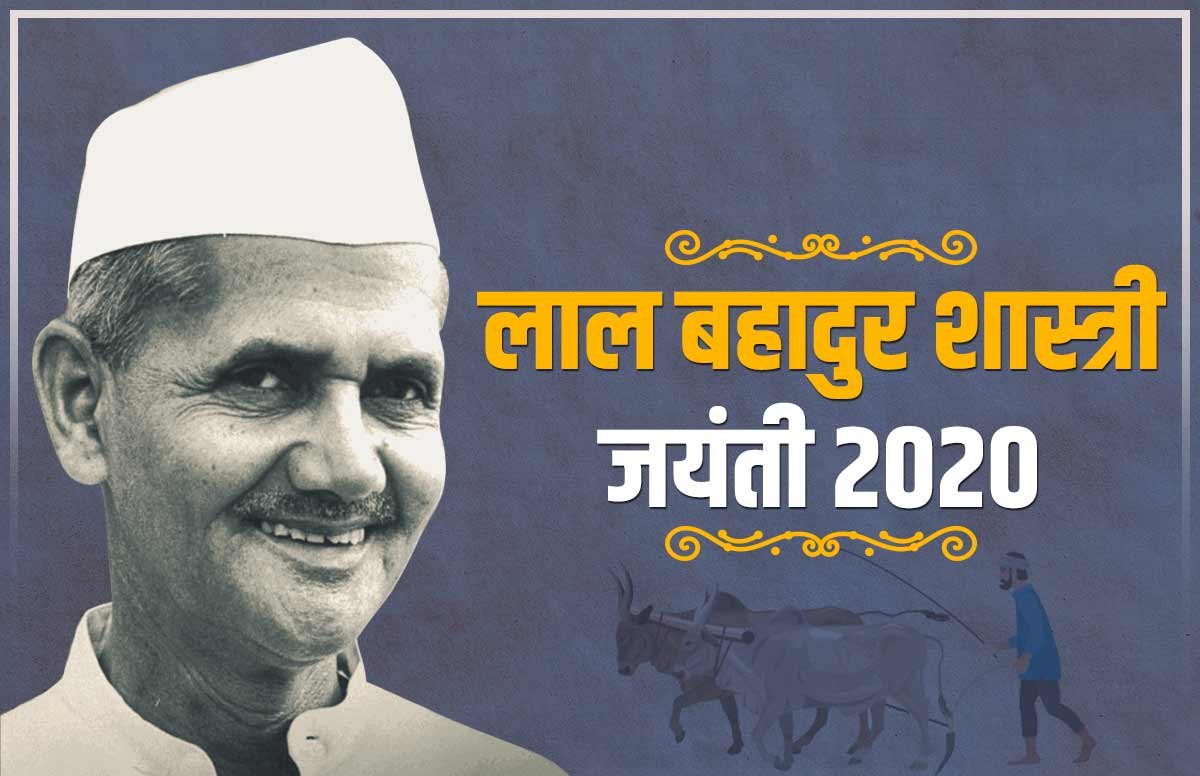
For his contributions to the country’s quest for self-reliance and independence, Indian Prime Minister Lal Bahadur Shastri was widely regarded as a statesman of the highest order. His birthday is on October 2nd. Shastri was a frail, soft-spoken man revered for his intellect and character strength. He is best known for his catchphrase “Jai Jawan Jai Kisan,” which he learned in Mughalsarai (modern-day Uttar Pradesh). He was profoundly influenced by Mahatma Gandhi, with whom he shared a birthday.
After Jawaharlal Nehru died unexpectedly, Shashtri became India’s first prime minister. Despite his lack of presidential experience, he led the United States through the Indo-Pakistan War of 1965 with flying colors.
He died of a heart attack in Tashkent, Uzbekistan, a day after signing the Tashkent Declaration. Due to the lack of a postmortem examination, the cause of his death remains unknown.
The following are some little-known facts about Lal Bahadur Shastri.
- Lal Bahadur Shrivastava’s father was Sharada Prasad Shrivastava, and his mother was Ramdulari Devi. However, his surname was dropped because he was opposed to the caste system at the time.
- He was given the title “Shastri” after graduating from Varanasi’s Kashi Vidyapeeth in 1925. “Shastri” means “scholar” or “well-versed” in the holy scriptures.
- On August 15, 1947, he was appointed Minister of Police and Transport. During his presidency, the first female bus drivers were hired.
- His solution for dispersing riotous crowds was water jets, not lathis.
- He supported the White Revolution and argued for increased milk production and supply.
To oversee dairy research and development in the United States, the National Dairy Development Board was established in 1965. - While he was Prime Minister, his family reportedly begged him to buy a car.
The car initially cost him Rs 12,000 (approximately $130). - He only had to put down Rs. 7,000 as collateral on his account in order to borrow the remaining Rs. 5,000 from Punjab National Bank. The car was given to the Shastri Memorial in New Delhi and is now on display there.
- After his death, he was the first person to receive India’s highest civilian honor, the Bharat Ratna. Due to his involvement in the freedom movement, which landed him in jail frequently, he had to serve a 15-day parole period when his daughter became ill.
- He was by her side when she died as a result of her illness. Despite being eligible for parole, he returned to prison a few days after performing his daughter’s last rites.
